Sajhedari Youth Network Submits Gen-Z Demands to Election Candidates in Rautahat
Share this
The Sajhedari Youth Network (SYN), a non-political provincial youth network with its secretariat at Kayapalat, has submitted a youth manifesto called the Sajhedari Demand to election candidates in Rautahat district, ahead of the upcoming election scheduled for 21 Falgun 2082 BS.
The demands were collected and consolidated through continuous engagement with non-political Gen-Z youth, including Gaun–Nagar Sambad (village–municipality dialogues) and provincial-level discussion programs. Through these platforms, young people shared their real problems, lived experiences, and future aspirations. This process builds on the momentum of Nepal’s recent Gen-Z movement.
Based on these consultations, SYN prepared a common manifesto that reflects youth priorities for a dignified present and a secure future. The document is organized into 12 thematic areas, covering key issues such as education, employment, governance, social justice, digital rights, and other concerns affecting young people.
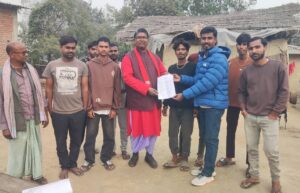
As part of its advocacy efforts, SYN representatives formally handed over the Sajhedari Demand to candidates from different political parties contesting in Rautahat at both local and provincial levels. The objective is to encourage political parties to include these youth agendas in their election manifestos and commit to implementing them as elected.
In Rautahat, the manifesto was handed over to:
-
Rajesh Chaudhary, candidate from Rautahat Constituency No. 1 representing the Rastriya Swatantra Party (bell symbol), who expressed his commitment to include the Gen-Z demands in his election manifesto.
-
Satyanarayan Bhagat (Bin Nishad), candidate from Rautahat Constituency No. 4 representing the Pragatishil Loktantrik Party, who pledged to integrate the shared youth demands into his party’s election declaration.
-
Raj Kumar Tatma (Rajkumar Das Tatma), candidate from Rautahat Constituency No. 4 representing the Janata Samajbadi Party, who also committed to incorporating the youth agendas into his manifesto.
Sajhedari Youth Network stated that this initiative aims to bridge the gap between non-political youth aspirations and political accountability. By directly engaging candidates, the network hopes to ensure that Gen-Z voices are reflected in policy commitments and future governance.
Through this process, SYN continues to advocate for youth-centered reforms and stronger democratic participation, emphasizing that meaningful change is only possible when young people’s concerns are heard and acted upon in the electoral process.