The streets have always been more than spaces for movement. They are places where people meet, express themselves, question power and make their voices visible. For young people in Madhesh, Koshi and Bagmati, the street has increasingly become a space to express what they want from their society and democracy. Through Street Level Artivism, Kayapalat has explored how art, dialogue and public expression can bring young people’s concerns into the public space. For many young people, participation does not begin inside a meeting hall. It begins with the courage to stand together, speak openly and ask a simple question: What kind of Nepal do we want to live in?
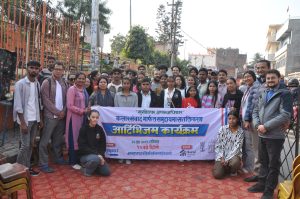
From Janakpurdham to Biratnagar and Kathmandu, young people carry different experiences but share many common aspirations. A young person from Madhesh speaks about dignity, equal opportunities, representation and the need for institutions to listen beyond the capital. Youth from Koshi bring conversations about inclusion, identity, employment and access to opportunities. In Bagmati, young people confront the pressures of urban life, environmental degradation, inequality and the distance between citizens and decision-makers. Their contexts may differ, but their expectations are remarkably connected: they want accountable institutions, meaningful participation, safe and inclusive public spaces, quality education, decent opportunities and a future in which their voices are not treated as an afterthought.
Street Level Artivism created a different language for expressing these concerns. Instead of relying only on speeches, reports or formal consultations, young people used creative expression to communicate what they experience and what they demand. Public art, performances, visual storytelling, conversations and campaign activities transformed ordinary spaces into temporary civic platforms. The street became a place where a passerby could stop, observe, question and participate. In this process, Kayapalat’s role was not to speak for young people, but to create spaces where young people could speak for themselves. That distinction is important. Youth participation becomes meaningful when young people are able to define their own concerns, express disagreement and imagine their own solutions.
The movement also reflects a wider change in how young people understand activism. They are not interested only in traditional forms of protest or institutional politics. They are experimenting with creativity, digital media, public art, storytelling and community conversations. Through Kayapalat’s wider youth engagement, campaigns and dialogue initiatives, these forms of expression have connected everyday concerns with larger questions of democracy, human rights, climate justice and governance. A conversation on a street corner can become a discussion about public accountability; a piece of art can challenge a social norm; and a youth campaign can turn an overlooked community issue into a public conversation.
What young people ultimately want is not simply to be seen. They want to be heard and they want their voices to matter. The youth from Madhesh, Koshi and Bagmati are showing that participation can take many forms and that democracy does not belong only to institutions. It also belongs to streets, communities, classrooms, public spaces and digital platforms where citizens come together. Street Level Artivism is therefore more than an artistic activity. It is an invitation to reclaim public space, express lived experiences and imagine a more inclusive society.
The voices coming from the streets are diverse, sometimes critical and often impatient but they carry hope. They are asking for a Nepal where young people are trusted as citizens today, not merely celebrated as leaders of tomorrow. The street is speaking. The question is whether institutions are ready to listen.