
Janakpurdham, 16 November 2025 — Janakpurdham is changing quickly. As the city grows, so do its environmental challenges. Air pollution, unmanaged waste, noise, declining green spaces, and pressure on natural resources are increasingly becoming part of everyday life. Yet, these issues are often discussed separately, without enough space for citizens, government, experts, and civil society to sit together and ask what is really happening and what needs to change.
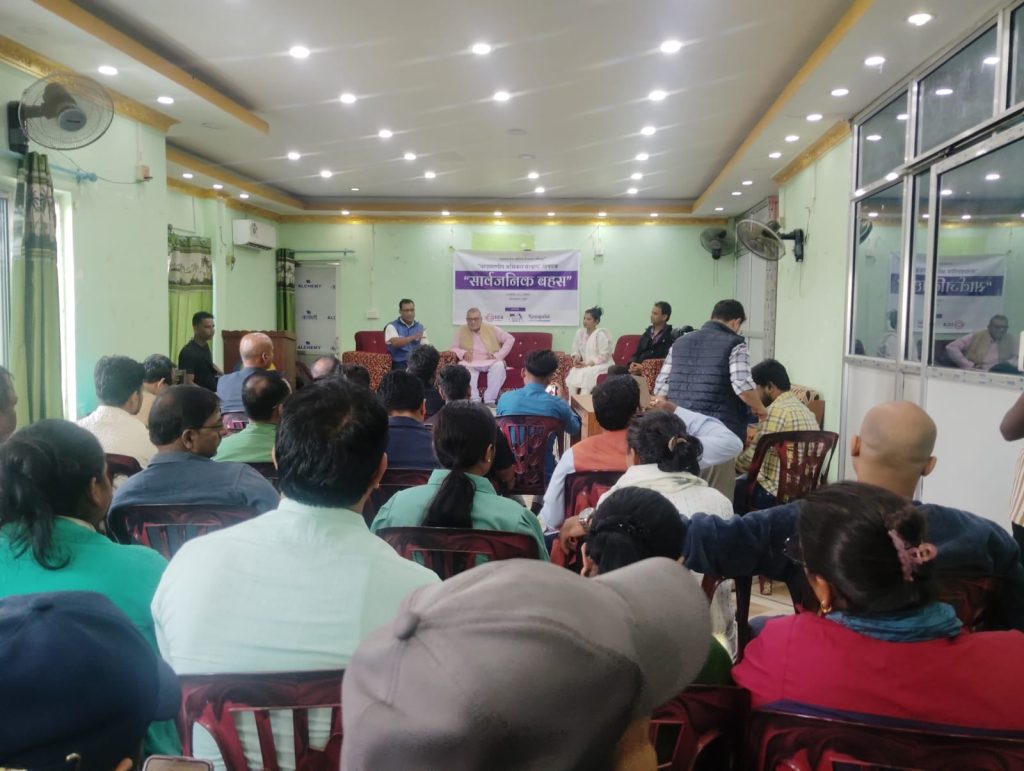
Recognizing this need, INSEC Madhesh Province, with financial support from DCA and in coordination with Kayapalat, organized a public dialogue on “Protection of Environmental Rights” in Janakpurdham on 16 November 2025. The discussion brought together representatives from local and provincial government, the National Human Rights Commission, environmental experts, civil society organizations, women representatives, community voices, and human rights defenders.
The dialogue started from a simple but important idea: a clean and healthy environment is not only about having a cleaner city—it is a basic right of every person. When people breathe polluted air, live around unmanaged waste, face unsafe water and sanitation, or experience the loss of natural resources, their health, livelihood, dignity, and quality of life are directly affected.
This connection between environment and human rights was strongly emphasized during the discussion. Buddhanarayan Sahani, Chief of the National Human Rights Commission, Madhesh Province, stressed that environmental rights are part of human rights and that government and concerned stakeholders must take responsibility for protecting them. INSEC Madhesh Province Coordinator Raju Paswan also highlighted the constitutional right to a clean and healthy environment and raised serious concerns about the impact of Chure exploitation on the environmental rights of people in Madhesh.
The discussion also brought attention to the reality on the ground in Janakpurdham. Waste management emerged as one of the most urgent concerns. Participants pointed out that collecting waste from one place and dumping it somewhere else cannot be considered proper waste management. The city needs better systems for waste separation, treatment, recycling, and safe disposal. They also noted that although policies and procedures related to sanitation and waste management already exist, the bigger challenge is putting them into practice.
Air pollution and the lack of green spaces were another major concern. Environmental expert Ajit Srivastava emphasized the need for more tree plantation, regular cleanliness, research-based waste management, and stronger enforcement of environmental rules. Participants also raised concerns about growing noise pollution and the need for local authorities to take it more seriously as the city becomes busier.
The conversation went beyond the city itself. The Chure region, which is closely linked with the environmental and water security of Madhesh, was also identified as an area requiring stronger protection. The discussion made clear that environmental damage in one part of the province can create wider consequences for communities, water resources, agriculture, and livelihoods.
Another important finding was that environmental problems do not affect everyone in the same way. Women, for example, often have a closer relationship with natural resources because of their responsibilities related to water, firewood, grass, and household needs. Dipika Karn, a women officer at the Ministry of Sports and Social Welfare, highlighted the need for environmental policies and programmes to better respond to women’s experiences and needs.
The dialogue also showed the importance of evidence and research. Environmental problems cannot be solved only through occasional campaigns or awareness programmes. Janakpurdham needs to better understand its pollution, waste, water, and environmental conditions and use that information to make practical decisions. This requires stronger cooperation between local government, experts, researchers, civil society, media, and citizens.
For Kayapalat, creating and supporting spaces for such conversations is closely connected to its work on climate justice, human rights, civic participation, and environmental action. The organization believes that people affected by environmental problems should have a meaningful voice in the decisions and policies that affect their lives.
The dialogue therefore offered more than a discussion. It created a space where different perspectives could meet and where environmental challenges could be understood as issues of rights, health, governance, equality, and justice.
Most importantly, the programme showed why such dialogues are needed now. Janakpurdham cannot wait until environmental problems become a bigger crisis before acting. Awareness is important, but awareness alone is not enough. Strong policies, effective implementation, public accountability, research, and continued dialogue are equally necessary.
The message from the discussion was clear: Janakpurdham needs to move from talking about environmental problems to taking collective action on them.