
Janakpurdham, Madhesh Province | 27 July 2026
Kayapalat, together with like-minded organizations including Informal Sector Service Centre (INSEC) Madhesh Province, National Dalit Network, ROYAM Nepal, Mukti Nepal, SABAL Nepal, Dalit Janakalyan Yuwa Club, and National Network of Women Human Rights Defenders, organized the Madhesh Province Human Rights Conference in Janakpurdham on 27 July 2026.
The conference brought together human rights defenders, civil society representatives, government officials, security agencies, elected representatives, lawyers, activists, and other stakeholders to discuss the current human rights situation in Madhesh Province and identify areas for stronger collective action.
Addressing the conference as the Chief Guest, Province Head Dr. Surendra Labh Karna emphasized that a prosperous and just society cannot be built without ensuring human rights, equality, and social justice. He called for stronger cooperation among the government, civil society, human rights defenders, and communities to build a human rights-friendly society. He also highlighted continuing challenges such as caste-based discrimination, dowry practices, witchcraft-related violence, and violence against women, particularly affecting marginalized communities and people living in border areas.
Member of the House of Representatives Ganesh Bishwokarma stressed the need to turn the principles of human rights, social justice, and inclusive representation into practice. He highlighted the lack of meaningful representation of Dalit communities in the House of Representatives from Madhesh Province and called for greater participation of marginalized communities in all levels of government and public institutions.
The conference also brought together representatives from government and security institutions. Madhesh Province Minister for Labour and Transport Sharda Devi Thapa emphasized that human rights cannot be fully realized as long as decisions continue to be influenced by caste, class, community, or gender. Representatives of the Nepal Police and Armed Police Force also reaffirmed their commitment to human rights-based security and law enforcement, including stronger responses to domestic violence, dowry-related violence, and violence against women and children.
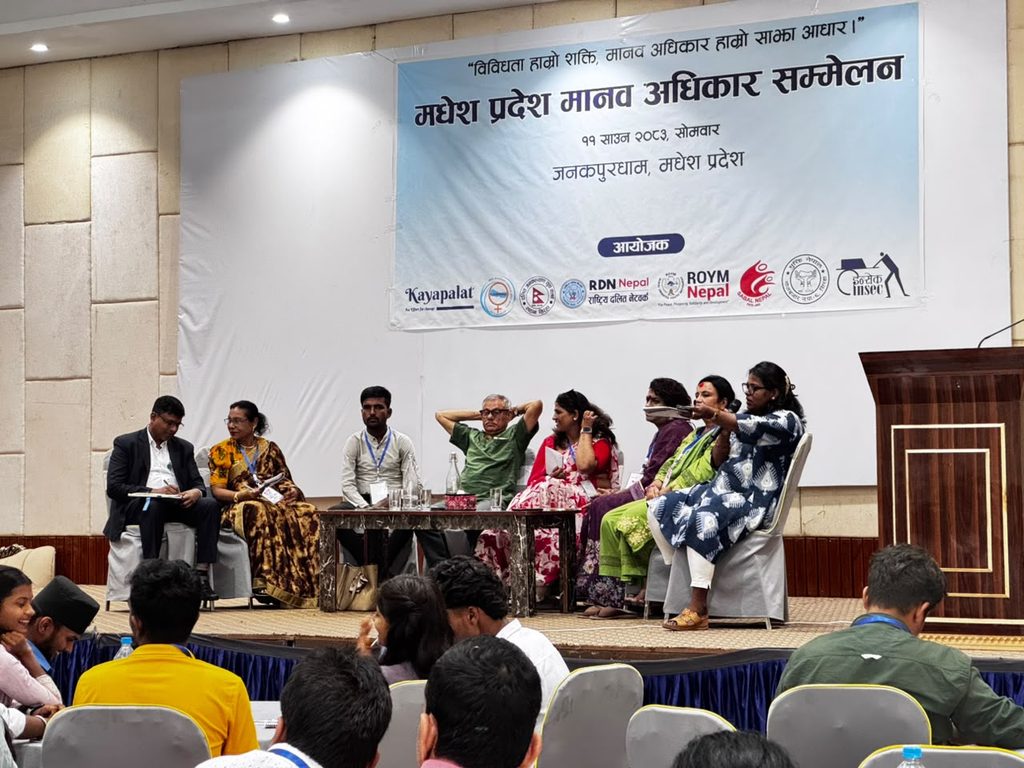
Speaking at the conference, INSEC Founder President Sushil Pyakurel reflected on the historic role of Madhesh in Nepal’s democratic and human rights movements. He emphasized the need for stronger state responsibility in protecting citizens and called for greater efforts to end caste discrimination, untouchability, and inequality.
Similarly, INSEC Chairperson Bijay Raj Gautam highlighted human rights as a fundamental value of democratic governance. He called for stronger cooperation between the state, civil society, media, and human rights defenders to address human rights violations. He also emphasized the need for a dedicated legal framework to protect human rights defenders.
The National Human Rights Commission Madhesh Province Chief Buddhanarayan Sahani highlighted the important role of human rights defenders in a democratic society and stressed that their safety and security must be ensured. He called for better coordination among relevant institutions to make the work of human rights defenders safer, more respected, and more effective.
During the conference, INSEC Madhesh Province Coordinator Raju Paswan presented an overview of the human rights situation in the province based on documented cases included in the Nepal Human Rights Yearbook. The presentation highlighted concerns related to human rights violations, access to justice, police custody, protection of human rights defenders, and the effectiveness of human rights support mechanisms.
As part of the conference, participants also engaged in discussions on contemporary human rights issues with human rights defenders, lawyers, representatives of the National Human Rights Commission, and civil society leaders.
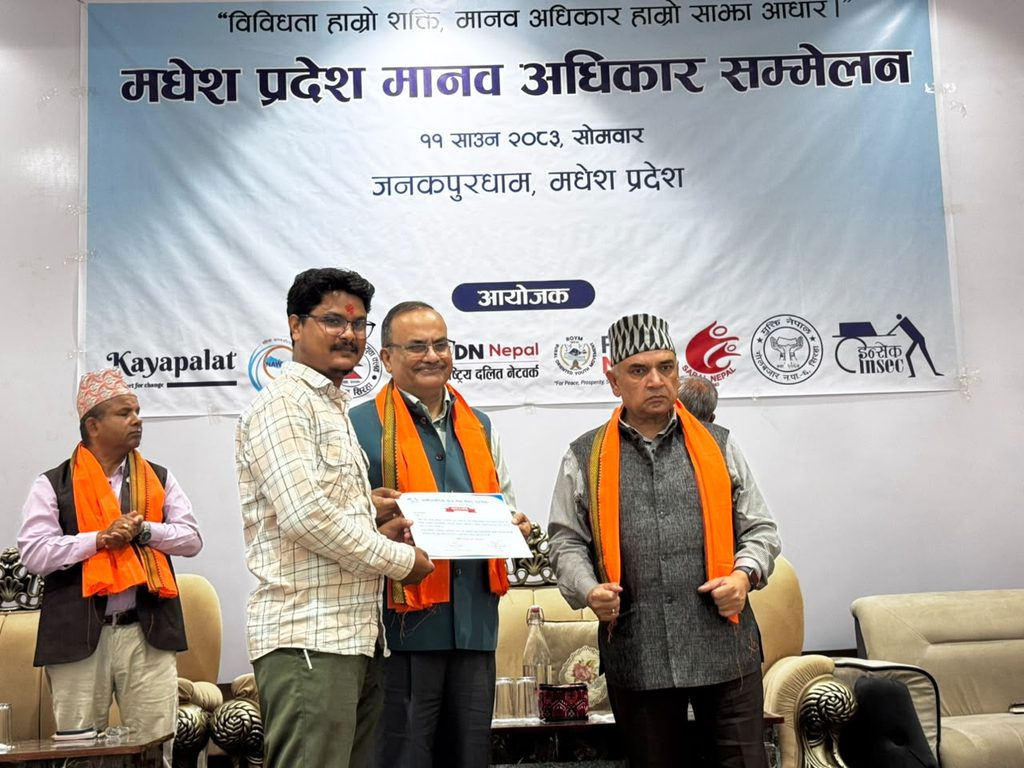
Representing Kayapalat, President Diwakar Upreti presented on fundamental rights guaranteed by the Constitution of Nepal, equality, social justice, and the rights of marginalized communities. He highlighted caste discrimination, child rights violations, child marriage, the ghumto practice, and other harmful social practices as continuing human rights challenges in Madhesh. He stressed that legal provisions must be effectively implemented alongside awareness and community-level action to bring meaningful change.
The conference concluded with a shared commitment to strengthen collaboration among government institutions, civil society organizations, human rights defenders, communities, and other stakeholders. The conference also issued a 15-point declaration, calling for concrete action to ensure the effective protection and implementation of the rights of marginalized communities, including Dalits, women, Indigenous communities, Muslims, and sexual and gender minorities, and to address caste discrimination, untouchability, gender inequality, and other forms of exclusion in Madhesh Province.
The conference provided an important platform for human rights defenders and stakeholders across Madhesh to come together, share experiences, identify continuing challenges, and strengthen collective efforts toward a more equal, inclusive, and rights-respecting society.